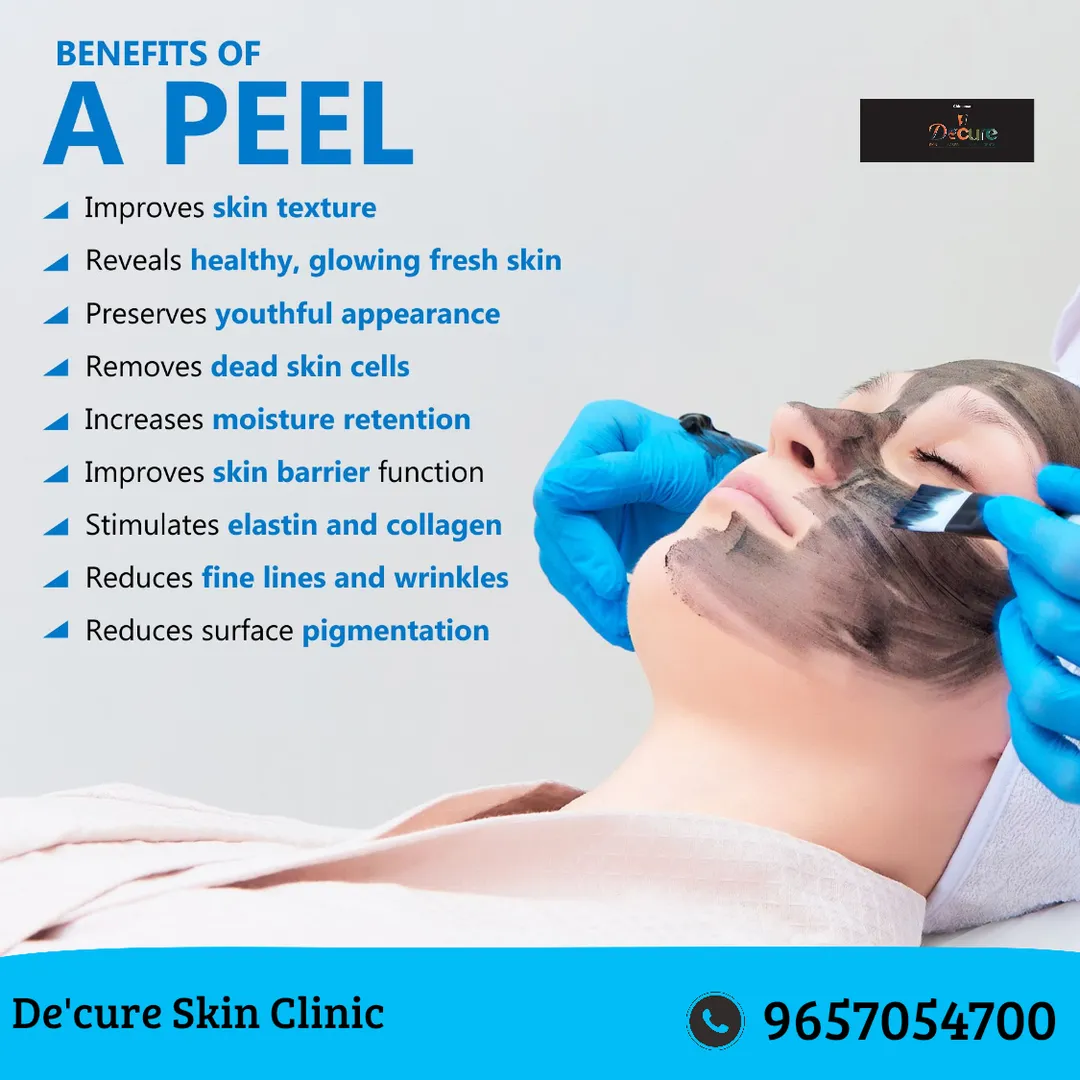
Chemical peels are popular dermatological treatments used to improve skin texture, tone, and overall appearance. They involve applying a chemical solution to the skin, causing controlled exfoliation of the outer layers. Once the old skin peels away, it reveals smoother, healthier, and rejuvenated skin underneath.
Types of Chemical Peels:
1. Superficial Peels: Use mild acids like alpha-hydroxy acids (AHAs) to treat mild discoloration and rough skin. Suitable for all skin types and requires little to no downtime.
2. Medium Peels: Often use trichloroacetic acid (TCA) to treat fine lines, wrinkles, and moderate discoloration. Some downtime is required.
3. Deep Peels: Use stronger acids like phenol to address severe wrinkles, deep scars, and sun damage. Significant downtime is required, and these are typically done under medical supervision.
Benefits:
• Reduces fine lines and wrinkles
• Improves skin tone and texture
• Minimizes acne scars and pigmentation
• Stimulates collagen production for firmer skin
• Brightens dull and tired-looking skin
Aftercare Tips:
• Avoid direct sun exposure and apply sunscreen regularly.
• Use gentle, hydrating skincare products to support healing.
• Avoid picking at peeling skin to prevent scarring.
Chemical peels are customizable, so they can be tailored to meet individual skin concerns. For best results, consult a dermatologist to determine the most suitable type and frequency of treatment for your skin type and goals.
Keywords